📄 Executive Summary
Linux Fundamentals serves as an introductory guide for beginners, aspiring system administrators, and users transitioning from graphical operating systems to command-line Linux environments. Assuming no prior experience with Unix-like systems, the text presents the core concepts and operational techniques necessary to work effectively within mainstream distributions such as Debian, CentOS, Ubuntu, and Red Hat Enterprise Linux. Its scope spans Unix and Linux history, open-source software licensing, virtualization setup, command-line operations, directory hierarchies, stream processing, entry-level shell scripting, user administration, and security controls.
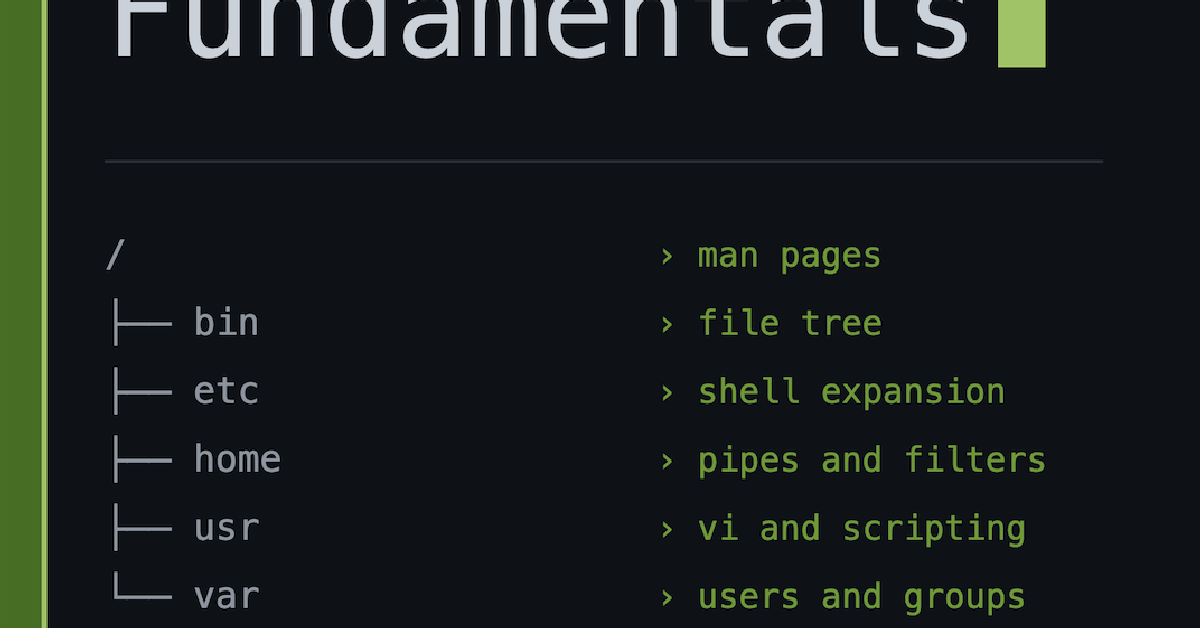
The text organizes its material in a clear progression that builds practical competence from foundational concepts to intermediate system tasks. Beginning with historical background and step-by-step virtual machine installations using VirtualBox, it establishes the Unix principle that "everything is a file" and introduces manual page documentation. From there, it covers the Filesystem Hierarchy Standard, guiding readers through directory structures and file operations before detailing the mechanics of the command line. Readers learn how the Bash shell parses arguments, handles quoting, establishes aliases, evaluates control operators, manages environment variables, resolves glob patterns, and controls input and output streams through redirection and pipes.
Building on command execution and text manipulation, the book explores text filters, regular expressions, and the modal editing workflows of vi and vim. It then covers shell scripting basics, addressing she-bang declarations, execution environments, conditional testing, control loops, argument shifting, and user-defined functions to help readers read and interpret administrative scripts. Moving into multi-user system administration, the text explains user and group lifecycle commands, password security and shadow files, shell initialization profiles, standard file permissions, and advanced access controls including setuid, setgid, sticky bits, and Access Control Lists. It concludes with file system internals, such as inode tables and link structures, as well as hardware inspection using device utilities and the /proc pseudo-filesystem.
The volume maintains strict boundaries, focusing on workstation and server essentials while excluding advanced enterprise administration. Complex topics such as writing intricate scripts, editing the sudoers file, configuring package repositories, and managing network directory services like LDAP or Samba are left outside its scope. Upon completing the book, readers will understand the architectural foundations of Linux, operate comfortably within a shell interface, process system data with pipelines, configure user accounts and permissions, and troubleshoot core system components.